
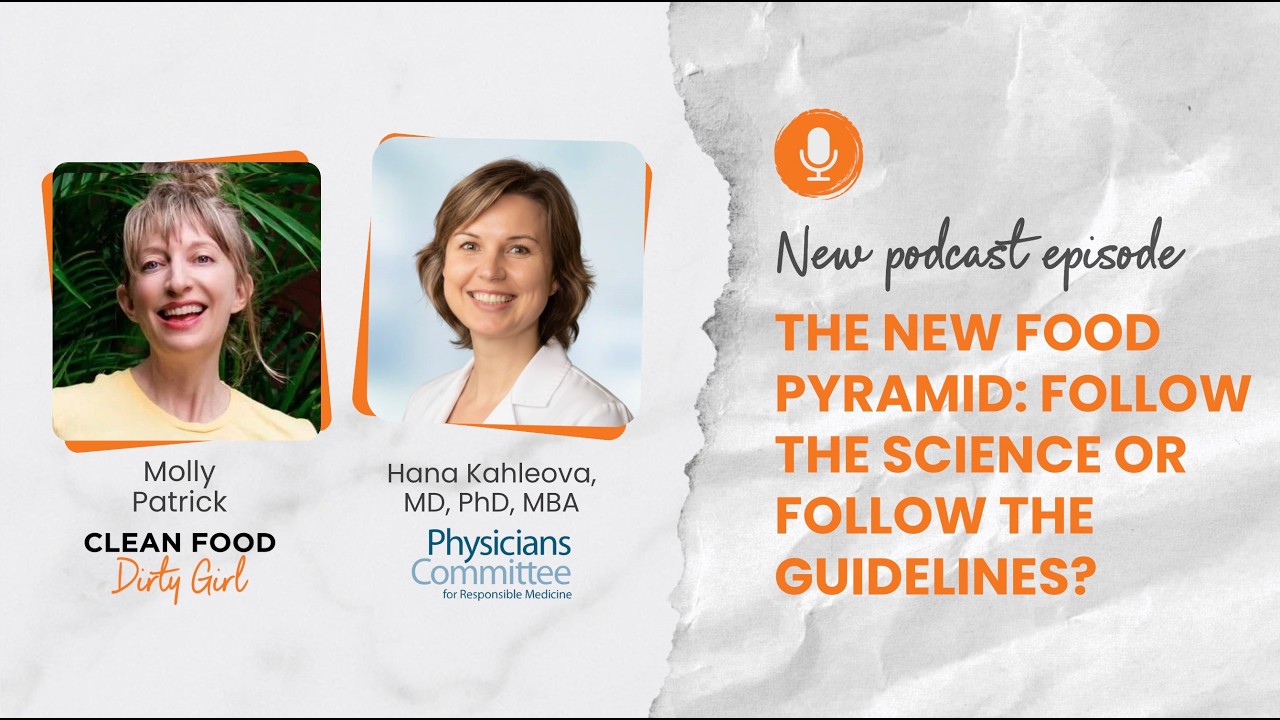
154: The New Food Pyramid: Follow the Science or Follow the Guidelines? Let’s Talk About It With Dr. Hana Kahleova.
This episode is a tad sweary.


Show notes:
In this episode, I chat with Hana Kahleova, MD, PhD, MBA, a leading endocrinologist and researcher, who shares evidence-based insights on how plant-based eating can reverse and prevent chronic diseases like diabetes, heart disease, and even Alzheimer’s.
We dig into the newly updated Dietary Guidelines for Americans and why the heavy push for meat and dairy (while legumes and whole grains get sidelined) doesn’t line up with years of evidence. Dr. Kahleova breaks down what saturated fat is really doing inside the body in a way that’s simple and clear. She empowers us to make smarter, scientifically grounded nutrition choices.
But this convo isn’t just about what’s on your plate. It’s also about when you eat, how you move, and why your sleep might be the key to better blood sugar control.
If you’re dealing with type 2 diabetes, menopause, brain fog, or you just want to stack the odds in your favor for a more vibrant life, this episode is packed with empowering, science-backed info you can put to work today.
- Saturated fat + insulin resistance: The “fridge analogy” that explains how excess fat spills into your organs and gums up your metabolism.
- Meal timing: Why eating breakfast like a queen and dinner like a minimalist can improve blood sugar control by up to 20%.
- Acid load + leafy greens: How animal products increase dietary acid load—and why greens are your body’s built-in balancing system.
- Soy + menopause: The jaw-dropping study showing that just ½ cup of cooked soybeans a day dramatically reduced severe hot flashes.
- Brain health: A look at research on lifestyle changes and early-stage cognitive decline.
- Protein myths: Why the obsession and what your body does with excess protein.
Helpful links
- Physicians Committee for Responsible Medicine (PCRM)
- Dietary Guidelines For Americans
- The Exam Room Podcast
- Clean Food Dirty Girl Drop It Club: Plant-Powered Weight Loss that takes a low fat WFPB approach
- Clean Food Dirty Girl Meal Plan Club
About Hana Kahleova, MD, PhD, MBA
Dr. Kahleova is a board-certified endocrinologist, with a PhD in human physiology and pathophysiology, and a board certification in lifestyle medicine. She serves as a director of clinical research at the Physicians Committee for Responsible Medicine, and her research focuses on nutrition treatment of obesity, diabetes, and metabolic disease. Dr. Kahleova has published close to 100 scientific papers in peer-reviewed medical journals.
As a member of the American Diabetes Association and as a chair of the board of the Diabetes and Nutrition Study Group of the European Association for the Study of Diabetes, Dr. Kahleova is directly involved in the process of updating the nutritional recommendations for people with diabetes.
Transcript, auto-generated, may have errors
Molly Patrick:
Hey there, and thanks for listening to this episode or watching this episode of the Clean Food Dirty Girl podcast. I have a big treat for you today. I have Dr. Hana Kahleova, and she is super wicked smart. We’re going to be talking all things plant-based, the body, and all kinds of good things. So, Dr. Hana Kahleova—did I say that right? I always say it right in my mind, but then sometimes it comes out…
Hana Kahleova, MD, PhD:
Yeah.
Molly Patrick:
Thank you for joining us. I’m really happy for you to be here, to make this appearance, and to help this community understand more about plants and the role that they play in the body. So, thank you.
Hana Kahleova, MD, PhD:
My pleasure, thanks for having me.
Molly Patrick:
Yes, absolutely. I love having experts on the show, and you are indeed an expert. You are an endocrinologist, a researcher, an author, and a speaker who is passionate about finding the most effective ways to reverse chronic disease through proper nutrition and a healthy lifestyle. You are actually the director of clinical research at the Physicians Committee for Responsible Medicine. PCRM is a fantastic organization. I’ve talked to many of your colleagues and have really appreciated that resource and all it provides for so long. You’ve published more than a dozen nutrition studies, and you have your doctorate in nutrition with an emphasis on diabetes, is that right?
Hana Kahleova, MD, PhD:
Yeah, my PhD is in human physiology and pathophysiology, which are the mechanisms in the body. How does nutrition affect our body more specifically? What are the mechanisms that are affected?
Molly Patrick:
Okay, this is so good. So yes, we are in good hands with you. You are quite the expert. We were talking a little bit before I hit record, and when I had originally reached out to you, I had really wanted to talk about the updated food guidelines that recently came out. I spoke with one of your colleagues, Dr. Anna Herby, about this on a previous episode. I want to touch there and use that as a jumping-off point. I listened to the Exam Room podcast where you and Dr. Anna were discussing this, and I thought it was a really important episode; I learned a ton.
With the updated guidelines, there’s a lot of emphasis on meat, red meat, dairy, and high-fat dairy. There’s very little emphasis on plant-based foods. In fact, if you dig through the realfood.gov website, you actually see a whole section about vegetarian and vegan diets that is kind of alarming. I spoke with Dr. Anna about where that information was extrapolated from, but I would love to get your broad, expert advice. If somebody was actually going to follow those guidelines as they are written and suggested, can you tell us a little bit about the concerns with that?
Hana Kahleova, MD, PhD:
Absolutely. Well, number one, we need to take into consideration how these dietary guidelines came into existence. The scientific report, which has been produced over the past two years as a recommendation and as a basis for the dietary recommendations, has been just set aside. So the doctors who worked on it for two years—the evidence has been set aside. Eight of the nine panelists on the dietary panel had direct ties to the food industry, the meat and dairy industry, and low-carbohydrate products that are being pushed and sold.
This is simply unacceptable because when we look at something that’s not evidence-based, and where the people who are recommending them are actually benefiting from selling more meat, dairy, and low-carbohydrate products, this is something that’s unacceptable. So the Physicians Committee has asked the government to retract these dietary guidelines. That’s number one.
Number two, since the evidence has been set aside—that was supposed to be the basis for the dietary guidelines—let’s look at the evidence and the recommendations for the dietary guidelines. They actually said the opposite. They recommended that Americans are deficient in fiber and we need to make sure that we consume more fiber. Specifically, we need to make sure that people consume more legumes, more beans, lentils, and peas. Those are the richest sources of fiber, and average Americans don’t consume them as they should. Number two would be whole grains. Fruits and vegetables have been emphasized to the public, but even in those categories, people fall short.
But the biggest gap is in legumes and whole grains. So back to your question: what would happen if somebody actually followed the new dietary pyramid? Well, it’s easy. When you put meat and cheese at the center of your plate on the same level as vegetables, you will very quickly exceed the recommendations for saturated fat. Those recommendations for saturated fat come from all the societies as evidence-based guidelines, like the American Heart Association and the American Diabetes Association. All these societies are recommending to cut down on saturated fat. There is no way to put meat and cheese at the center of your plate and not exceed the recommended intake for saturated fat.
Molly Patrick:
Yeah, that’s kind of impossible. I mean, I guess it goes without saying those guidelines from all those other organizations or those recommendations haven’t changed. There hasn’t been new evidence that those…
Hana Kahleova, MD, PhD:
That’s right. They’re evidence-based, so they haven’t changed, in contrast to these guidelines that are not evidence-based.
Molly Patrick:
Right, yeah. I think that’s really the bottom line for people to keep in mind: these updated guidelines are not evidence-based. So follow them at your own peril, I guess, because there’s no science that backs up that this is the way to go. I want to talk a little bit about the mechanism of saturated fat in the body. When we exceed a certain amount, what actually goes on in our body?
Hana Kahleova, MD, PhD:
The first thing that happens is that all the fat we eat is being incorporated into our cell membranes. You may recall from biochemistry that each cell has a membrane made of a phospholipid bilayer, and the phospholipids—you hear the word lipids, which is for fat. So all the fat we eat in the diet is being incorporated into the cell membranes.
Now, saturated fat—butter is solid; it’s like a brick. You can kind of picture that the membranes in your body will also become more rigid as a result of eating saturated fat. In contrast, monounsaturated and polyunsaturated fat from plants make the cell membranes more flexible. Now, why is that important? Well, the insulin receptor is embedded in the cell membrane. That means if we eat a lot of saturated fat and the cell membranes become more rigid, this is the underlying cause of insulin resistance. Now the insulin receptor and the insulin cascade are not working properly because the cell membrane is just more rigid. And so that’s the underlying cause of pre-diabetes and diabetes down the road.
Molly Patrick:
Okay, so is that specific to saturated fat, or is that an overconsumption of all types of fat as well?
Hana Kahleova, MD, PhD:
This composition of the cell membranes is about the ratio of the fat that we’re consuming and the proportion of saturated fat that we’re consuming. So too much saturated fat, in particular, is the underlying cause of insulin resistance in the cell membrane. But it doesn’t end there because our adipose tissue has only a certain capacity to store fat. It’s like your fridge has a certain capacity to take in all the food that you bring home. Now, if we just consume too much and too much, especially the calories coming from fat, they add up quickly because one gram of fat has nine calories, in contrast to carbohydrate and protein that have only four.
So the calories from fat add up super quickly, and now the fridge is full. What to do with the extra fat? Well, it needs to go somewhere. The fridge is full, so it’ll go on the counter, in the living room, and in the bedroom. This is exactly what the body is doing. The extra fat is now being stored in the organs such as the liver, the muscle, the pancreas, and the heart. It doesn’t sound healthy, does it? It’s like having soy milk that’s supposed to be stored in the fridge on your counter for two weeks—probably not a good idea. So it’s disrupting to the metabolism, and it’s further disrupting to the insulin cascade. This represents another mechanism, which is the underlying cause of insulin resistance. In other words, if you eat too much fat of any kind, this will also cause insulin resistance by this mechanism.
Molly Patrick:
No. Okay, well I liked your analogy. My brain appreciates a good analogy, so I like that one of the food in the fridge. If there’s too much, it’ll start going other places in your kitchen or your house, and we don’t want that. We want the food in the fridge. Okay, so that’s great. That’s the saturated fat portion of it. And in these guidelines, they’re really recommending whole-fat dairy products and meat, right? So let’s just talk about saturated fat. I know that there are some plant-based sources of saturated fat, but can you talk a little bit about animal sources of saturated fat versus plant sources of saturated fat?
Hana Kahleova, MD, PhD:
We know from studies that compare coconut oil, which is high in saturated fat, with butter and their effect on cholesterol. Coconut oil is not as bad as butter, but somewhere in between—it’s not as good as other plant sources of fat that don’t have as much saturated fat. Even though these tropical oils such as coconut oil or palm oil contain a lot of saturated fat, they don’t contain cholesterol, which is a good thing. So they will still raise your cholesterol in the body, but not as much as butter. But still, we want to keep them super low. I know that nowadays so many vegan products contain a lot of coconut oil. We need to be careful with these products.
Molly Patrick:
Yeah. With our meal plans and our recipes, we’ve always been oil-free. That’s why a lot of people sign up for them and follow them. Because even though they’re already avoiding animal products, they really want to get as much fat out of the diet as possible and just rely more on seeds, some nuts, and avocados. We’ve seen that be very effective for people who are managing or who are even reversing pre-diabetes or even type 2 diabetes.
Can you talk a little bit about a question I had from somebody in our community? The question was: what if you’re already eating a whole-food plant-based diet? You’re avoiding animal products, you’re avoiding overly processed foods, and you’re avoiding oil. Are there any other foods to be aware of if you are type 2 diabetic or if you have pre-diabetes?
Hana Kahleova, MD, PhD:
That’s an excellent question. If you have diabetes, then a whole-food plant-based diet and keeping the fat content super low will definitely help you. Another aspect to keep in mind is that it’s not only what we eat, but also when we eat. Having breakfast every single day has been shown to be beneficial for glycemic control for people with type 2 diabetes.
In a study, they gave half of the people breakfast and half of the people didn’t consume any breakfast. Those who skipped breakfast, their mean glycemic control or their mean blood sugar throughout the whole day was 20% higher. So eating breakfast keeps your blood sugar stable and it will decrease the blood sugar throughout the whole day.
We know the proverb: eat breakfast like a king, lunch like a prince, and dinner like a pauper. We decided to test this proverb in a research study. We compared, in people with type 2 diabetes, six small meals during the day with only two meals a day—breakfast and lunch—with the same calories and the same diet. People lost 50% more weight on two meals a day. Their insulin sensitivity improved more, and their liver fat was reduced more. What’s also interesting is that depressive symptoms were reduced more on two meals a day. People just felt better. And the kicker is that people reported less hunger on two meals a day than on six small meals.
So the short answer: a whole-food plant-based diet for somebody with diabetes is a wonderful start. But the second recommendation is also to pay attention to when you eat. If two meals a day—breakfast and lunch—seems like too big of a shift right away, maybe you can make dinner the lightest meal of the day. Just have a salad and push it a bit earlier in the day. Then you may eventually just replace it with an apple in the late afternoon, and then you skip the apple and have just water instead, and you’re on two meals a day.
Number three is obviously physical activity. We know that physical activity is important for all of us, but particularly for people with type 2 diabetes. When it comes to different kinds of physical activity, high-intensity interval training has been shown to be the most efficient way, not only for weight control but also for glycemic control in people with type 2 diabetes. High-intensity interval training is very easy. You don’t need long stretches of time; you only need 10 or 15 minutes a few times a week. The principle is for 30 seconds, you, let’s say, run or jump on a trampoline or do something to almost max out your heart rate—not quite, but very close, at least 80% of your maximal heart rate. Then for 10 seconds, you let your heart rate come down again. And then again for 30 seconds, you go all out.
You can find many videos that will just do it for you. You can do jumping jacks, you can do pushups, and you can do so many things. The beauty of this approach is that you only need 10 to 15 minutes a few times a week, and it’s been shown to be a game-changer for cardiometabolic health. So we have what we eat: a whole-food plant-based diet and keep the fat content low. Number two is when you eat: eat breakfast like a king, lunch like a prince, and dinner like a pauper. Number three is exercise, particularly high-intensity interval training. And number four is sleep. That may be surprising to many people, but the American Diabetes Association has put sleep on the same level as nutrition and exercise in the last dietary guidelines. It’s been shown that both the length and the quality of sleep can really help with glycemic control and are important in the prevention and treatment of diabetes. Get at least eight hours of sleep a night and go to bed early rather than late.
If you’re somebody who consistently goes to bed after midnight, maybe this week go to bed 15 minutes earlier than usual. Then next week, move it up again by 15 minutes. Week by week, you can gradually adjust your bedtime and you can get up earlier. You will have more energy and, as a result, your body will be able to produce more melatonin. You probably know the proverb: an hour of sleep before midnight equals two hours of sleep after midnight. It’s true because of the melatonin secretion. Melatonin goes up when it gets dark. So if we just stay up and have all the lights around us, we prevent this melatonin from going up. Melatonin is the youth hormone, and it’s also involved in glucose control. So we want to keep it as high as possible by going to bed early and getting our eight hours of sleep.
Molly Patrick:
Okay, well that was a lot of very good information. For anybody who is pre-diabetic or has type 2 diabetes, that’s really a lot of very good information. Do we produce less melatonin as we age?
Hana Kahleova, MD, PhD:
That’s right. Yeah, our melatonin production goes down. It’s not only about going to bed early, but it’s also being exposed to sunshine and natural sunlight during the day. Your good sleep at night starts in the morning. Ideally, in the morning, you want to go outside for at least five minutes. It doesn’t take long, but the five minutes is critical because your body will get the natural sunlight, and that will help spike the melatonin secretion at night much more than when we don’t have the natural sunlight.
Molly Patrick:
Interesting. And so when you do that, should you ideally be directly in the sun?
Hana Kahleova, MD, PhD:
It doesn’t matter whether you’re directly in the sun. Let’s say you go for a walk in a park or in a forest. Those trees and those green plants absorb the infrared light and they will shine it back to you. So it’s more about the infrared light than the ultraviolet. Obviously, you want to avoid going to the sun when it’s too sharp; you want to avoid getting burned. Ideally, go in the morning or in the later portion of the day.
Molly Patrick:
Okay, those are all wonderful tips and doable. These things are not that complicated. I like what you said about, “Okay, if you usually go to bed at midnight, just do 15 minutes earlier, see how that works.” I think there are people who really like to go all in with something, and then there are people who just need to taper off of things. I think that’s a great reminder that it doesn’t have to be all or nothing.
Hana Kahleova, MD, PhD:
Yeah, absolutely.
Molly Patrick:
Wonderful. Okay, so that kind of hits on the diabetes topic and why those food guidelines are quite problematic in regards to diabetes. Let’s talk a little bit about heart disease, if we can go to that topic now, and the mechanisms about that—not only the potential harm that animal-based products produce, but also the benefits of eating whole plant foods. How does that protect the heart, and what’s going on inside the body while that’s happening?
Hana Kahleova, MD, PhD:
Yeah, there are a few mechanisms why animal products are harmful to the heart. One of them is saturated fat, and one of them is heme iron. But another mechanism that we studied in our studies is the so-called dietary acid load. That means how acidic the animal products are. The dietary acid load can be calculated as a simple formula: it’s a function of protein and phosphorus, and you subtract magnesium, potassium, and calcium. Animal products are particularly high in dietary acid load. When we compare meat and cheese, cheese is about three times higher in dietary acid load compared with meat. When we look at plants, they’re much lower in dietary acids—half or even a third of what we see in animal products. Many plants, like fruits and vegetables, are actually alkaline. That means their dietary acid load is in negative numbers; they’re alkalizing for the body.
The difference can be quite stark between different meals that are animal-based or plant-based. What effect does it have when we eat more alkaline foods? Well, it has beneficial effects on our metabolism. When the dietary acid load shifts and is lower on a plant-based diet by default, it’s been associated with weight loss, improved insulin sensitivity, and improved body composition. So that means the alkalinity of the plant-based diet is just one of the mechanisms that plays a role. You’ve probably seen alkaline water in the grocery stores. If you like the taste and if you don’t mind spending the money, go for it. But the most effective way to shift your pH balance is actually eating more plant foods, particularly fruits and vegetables. And the champion when it comes to alkalinity is leafy greens. Those are the most alkaline foods. So make sure you have your leafy greens with all your meals because they will be most alkalizing for your body.
Molly Patrick:
Okay, and it really sounds like that is good for overall health, not just heart health, but the whole thing.
Hana Kahleova, MD, PhD:
Yeah, that’s absolutely right. It’s been shown that a higher dietary acid load has also been associated with chronic diseases such as cancer, particularly breast cancer, colon cancer, prostate cancer, and gastric cancer—all kinds of cancer. People whose diet was the most acidic had a 66% higher chance of getting cancer of any kind compared with those whose diet was much more alkaline. So it plays a role in all chronic diseases, not only cardiovascular disease and diabetes.
Molly Patrick:
My mom is 82 now, but she was a hippie and I was raised vegetarian and mainly plant-based. She’s been whole-food plant-based specifically since 1997. She’s in great shape, she’s very healthy, she has lots of energy, and she’s never had any major problems. She’s always talked to me ever since I was little about that alkaline balance. She’s like, “You don’t want your system to be too acidic; we need to alkaline it.” So we were always eating fruits and veggies, and she was always talking about that. I’m going to send her this episode when it’s out and just say, “Okay, you were right. There was something to that.”
Kudos to your mom because we didn’t have that many research studies at that time. She was ahead of her time. She really was. It was just sort of luck that she even got into it, and it was actually a doctor of hers who was really ahead of his time. Anyway, when I had the talk with Dr. Herbie, we were talking about how it’s like beans and leafy greens. It seems like those are just such powerhouses and should be staples in everybody’s diet because of the plethora of goodness they provide.
Can we talk about inflammation a little bit? Because that’s a big thing right now; it’s kind of like a buzzword. Let’s dive into inflammation. What causes it, what can help it, and what do you know about it?
Hana Kahleova, MD, PhD:
Absolutely. Inflammation develops in the body fairly quickly after a high-fat meal that’s animal-based. It’s a defense mechanism. Lipopolysaccharides are being released from the gastrointestinal system, from the gut bacteria, and this just causes low-grade inflammation. It’s also fairly easy to fix it when we eat plants that contain a lot of fiber. The fiber feeds the good guys in the gut, and now these have anti-inflammatory effects.
There are different types of bacteria. We have families, and families talk to each other; gut bacteria are the same. There are different families that talk to each other. Some families are bigger, some families are smaller. Some families are virtuous, and some not so much. So some gut bacteria families are anti-inflammatory—they’re the good guys, such as Prevotella and Bacteroidetes. And some families are actually promoting inflammation in the body, and that would be the family Firmicutes.
For example, in one study, they looked at children living in Burkina Faso in rural Africa and compared these children with children living in Italy. Obviously, the diet was so much different. The children in rural Africa ate mostly a plant-based diet. The children in Italy ate a lot of animal products. And so it also showed in their gut microbiome. The children living in Africa had a lot of Bacteroidetes that are anti-inflammatory and a lot of Prevotella, which are beneficial families of bacteria. The children living in Italy hardly had any of these families present, and it was the opposite: they had a lot of Firmicutes, the family that’s promoting inflammation. So what we eat has profound effects on the composition of our gut microbiome, and it just shows in the inflammatory markers that we can measure. It has profound effects on our risk of heart disease down the road.
Molly Patrick:
Okay, and are there any other problems that can occur later on if the inflammation is high? Is it just heart disease, or are there other problems that could happen as well?
Hana Kahleova, MD, PhD:
Increased inflammation is present in many other chronic diseases such as metabolic syndrome, diabetes, and also cancer. It’s one of the underlying causes of all chronic diseases. And we should also touch on neuroinflammation and Alzheimer’s disease because inflammation also plays a role in these types of diseases.
Molly Patrick:
Yeah, and it seems like there’s been some interesting research coming out about that fairly recently, in the past five years or so, where a lot more is known now. Can you talk about some of those studies?
Hana Kahleova, MD, PhD:
The most encouraging study that has been published in the last two years is Dr. Ornish’s study. He took people in the early stages of Alzheimer’s disease and put them on a plant-based diet. He put them on an exercise program, and they also had stress management and group sessions to support each other. It was a comprehensive program. He showed that cognitive function was actually improved in the intervention group compared with the control group who just received usual care. This is really encouraging because we’re now not only talking about the prevention and the importance of lifestyle in preventing diseases like Alzheimer’s, but now it looks like even the early stages can be reversed if people follow a comprehensive lifestyle like this.
Obviously, we need to take into account that most of the people needed support from their families, from their spouse, or from other family members because they would not be able to follow the program by themselves. In other words, we don’t want to get to that point ourselves. We want to prevent as much as possible, and we’d like to support everybody who’s in our family and may need such a change in their lifestyle.
Molly Patrick:
Yeah, there are just so many reasons to adopt this way of eating, to move your body, and to implement these healthy lifestyle changes. The longer you do it, the better, but also it’s never too late. We see a lot of people coming into our community who are in their early to mid-fifties who want to make some changes because of some news they got from their doctor or some labs that came back that they weren’t so happy with. We see a lot of people making these changes midlife, and people get amazing results. But I think in this country, anyway, there’s not a lot of emphasis on prevention. It’s very much, “There’s a problem, let’s look at it then.” So I think just reminding people that the preventative side of all this is so important, and it’s never too late to start.
Hana Kahleova, MD, PhD:
Absolutely. I agree.
Molly Patrick:
Let’s talk about osteoporosis for a minute because there are a lot of people in our community who are concerned with getting enough calcium and concerned about osteoporosis. Can you speak a little bit to that?
Hana Kahleova, MD, PhD:
The most important prevention and treatment of osteoporosis is getting enough exercise, particularly resistance exercise and weight-bearing exercise. You want to make sure that you’re hitting the gym or you’re lifting some weights. It’s the muscles that pull the bones, activate them, and keep them metabolically active. It’s the sedentary lifestyle where we don’t move that is the underlying cause of osteoporosis. So getting adequate nutrition is just a super small part of preventing and treating osteoporosis. Obviously, it’s important to get adequate nutrition, but it’s just a super small part of it.
Molly Patrick:
And is there a target that people should reach for if they’re like, “Okay, I need to get serious about incorporating exercise for osteoporosis”? Is there a certain amount—number of days or number of weights—that they should reach for?
Hana Kahleova, MD, PhD:
Absolutely. 30 minutes three times a week should be a minimum of using some kind of resistance training or weight-bearing exercise. You can also, if you’re somebody who likes to go on walks, just add super light weights and you can just move your arms while you’re walking here and there. So it’s not only about the weight itself—how much weight you’re lifting. You just want to challenge the muscles and you want to feel them.
Molly Patrick:
Okay, that’s a good way to put it: you want to feel them. Because then it’s a little less technical and you can just decide, “Okay, do I feel this? Then this is probably good.”
Hana Kahleova, MD, PhD:
By the way, I know somebody who is in her 80s and she ran her first marathon when she was 70. She’s super thin and super fit on the whole-food plant-based diet. A few years ago, they told her that she has osteopenia, so the initial stage of developing osteoporosis down the road. She took it seriously and she started just using light weights when she’s walking or when she’s running—not all the time, but just a few times a week. The results were fairly quick. In a one-year follow-up, she completely changed her bone density and it was completely normal.
So the changes can happen fairly quickly, but you need to be consistent with your exercise. It doesn’t take much. I just want to stress that you don’t need to do superhuman, super heavy weights. No, you just want to challenge your body a bit and you want to keep moving and you want your bones to be challenged as a result of challenging your muscles. That’s all.
Molly Patrick:
Well, that’s great. I think that’s very hopeful for people to hear. I know you can buy those weights that wrap around your ankles and even wrap around your wrists. That can be an easy way to incorporate that. So that’s fantastic.
I would love to talk about protein a little bit because I know also on these guidelines, the protein recommendation went up, and that’s not necessarily based on any updated scientific research. Can you talk about what you think of the current protein guidelines from these new updated guidelines? I didn’t realize that the RDAs didn’t change and that that was a whole separate thing from the dietary guidelines that just were put out.
Hana Kahleova, MD, PhD:
That’s right. The recommended daily dose is the same. It’s roughly 0.6 to 0.8 grams per kilogram a day. So it would be roughly 50 grams a day for women and 60 grams a day for men. If you want to consume more, sure, you can eat more beans and tofu and drink more soy milk, but it’s not necessary. In our culture, protein is being just overemphasized and overrated. Sometimes we’re being told that if we don’t eat these crazy amounts of protein, we will not have enough muscle. Again, that’s false. For muscle, you need to challenge your muscles in order for them to grow. So yes, you want to have enough protein, but if you just eat twice as much protein as you need and you don’t move, that’s not good; it doesn’t help anything. The extra protein will be converted into fat and you will just get more fat as a result.
Molly Patrick:
Okay, so that’s interesting. I want to stop you right there because I was going to ask: if we have more protein than our body requires, what happens to that protein? And is it different depending on what source of protein that is? If it’s animal-based protein, does it act differently than if it’s plant-based protein with the excess?
Hana Kahleova, MD, PhD:
Yeah, the excess will be simply converted into fat. It’s not as easy to convert it into fat as when you’re consuming too much energy in the form of fat. If you’re just putting a lot of olive oil on your salad, that extra fat may be stored immediately, basically. Not much energy is required. For protein and for carbohydrates that we take extra, the body will probably spend some energy—roughly 25%—converting them into fat before storing those extra calories in the form of fat. So that’s better than consuming extra energy in the form of fat, but not by too much. The bottom line is that too much of anything is not good for your body; it will just disrupt metabolism in the end.
Are there any differences between plant protein and animal protein? Absolutely. When it comes to the risk of all-cause mortality—the risk of dying from any cause—extra animal protein increases the risk dramatically. Extra plant protein doesn’t. So there are quite a few metabolic differences between animal protein and plant protein. It’s mainly because of the branched-chain amino acids that are particularly in animal products, and those promote insulin resistance and the development of diabetes down the road, and also cardiovascular disease. So there are differences, but the bottom line is that you don’t need any crazy amounts of protein. I know that they’re selling protein water nowadays. We don’t need it, okay? We don’t need isolated protein. We don’t need a protein bar that contains 40 grams of protein. Nobody needs it.
Molly Patrick:
It’s just everywhere. What I hear often—well, okay, so there are a few things. I’ve heard so many times people saying, “If you are middle-aged and if you’re a woman, and if you’re trying to lose weight, you have got to up your protein.” I’ve heard that story, and that’s kind of a new one. I’ve been in the plant-based world practically my whole life, and that’s a kind of new one I’m hearing. Can you talk a little bit about that and why that might be a little off?
Hana Kahleova, MD, PhD:
“Follow the money” is the shortest answer. There’s a demand for these products and people are trying to sell them. They’re trying to make a case for why we need protein. They’re arguing that if you work out, you need protein for your muscles. Well, you do, but you don’t need any crazy amounts. What you need is fairly covered by beans, tofu, and soy milk.
Molly Patrick:
Yeah, and if you’re eating enough calories, then you should be getting enough if you’re eating those types of foods. It’s like a trickle effect because a lot of influencers will talk about it, and then normal people will see the influencers talking about it, and all of a sudden you just have these people saying all of this and it’s not backed by science. It’s frustrating because it’s good to follow the money, look at the science, and really make sure there’s a reason where these people are getting their information. Even just going to the gym, so often the trainers—they don’t know, but they’re so convinced that they do know. It can be really conflicting.
I see a lot of mainstream podcasts talking about this. I heard the other day—and it wasn’t the first time—people talking about grams of protein per pound of body weight instead of per kilogram of body weight. I was like, “Wait, do they know that they’re saying this? Are they meaning to say this?” Because that’s going to be much different—pound versus a kilogram.
One last question about protein, just because I know that people will have questions about it: what about as we get older? Do the requirements go up?
Hana Kahleova, MD, PhD:
Well, this recommendation is based on the decrease in muscle mass in older people. Again, protein is just a small part of the equation. The most important thing is that you want to keep moving. You want to keep your body moving so that the muscles are being challenged and you at least keep the muscle mass. Before you get old, you want to make sure that you’re moving to maximize the muscle mass you have so that you’re not completely fragile a few decades from now.
Molly Patrick:
Okay, I like it. It makes sense. If all you do is eat a lot of protein without actually building your muscle, your muscles aren’t going to be magically very strong in a few days. It just doesn’t make logical sense. Thank you for that; very helpful.
There are a couple of questions that I had from the community. One of the questions I thought would be a really good question for you given your background is about the pros and cons of hormone replacement therapy and if there’s anything new about it or your thoughts on it.
Hana Kahleova, MD, PhD:
That’s an excellent question. Well, first of all, is there any alternative for postmenopausal women? We did a study where we put women on a whole-food plant-based diet, we kept the fat content low, and we supplemented this diet with half a cup of cooked soybeans every day for the isoflavones—for the phytoestrogens. On this type of diet, with the half a cup of cooked soybeans every day, the hot flashes were reduced by 88%—the moderate to severe hot flashes. And when it comes to the severe hot flashes that wake you up at night or that interrupt a meeting, those were reduced by 92%. So they almost disappeared.
Is there any alternative to hormone replacement therapy? Yes: a whole-food plant-based diet, and you want to supplement those phytoestrogens; you want to get enough soy products. Why did we use half a cup of cooked soybeans? Well, this amount of cooked soybeans gives you roughly what you need in terms of the phytoestrogens. Can you get them from tofu and soy milk? Absolutely. But you just need much higher amounts. So the easiest way to get enough isoflavones and phytoestrogens is roughly half a cup of soybeans every day. You can think about it as a medication. So it’s up to you: do you want to take a pill or a patch, or do you want to eat your soybeans?
It’s in combination with a whole-food plant-based diet and minimizing oil consumption. We found out that those participants—the study lasted 12 weeks, we had 84 women who were postmenopausal and were suffering from hot flashes—during those 12 weeks, some women accidentally or while traveling deviated from the study diet just a little bit. For example, when you travel, it may be challenging to find all the foods that are low fat, right? We found out that each deviation usually resulted in more hot flashes the next few days. So each component is critical: the whole-food plant-based, minimizing the oils, and consuming the soybeans. Why is it a better alternative than hormone replacement therapy? Well, because hormone replacement therapy has significant side effects, mainly the increased risk of breast cancer. So if you have an alternative like this one, this is where I recommend that people start. And then obviously, you want to consult your physician and see what makes sense for you specifically. But you always need to weigh the risks and the benefits.
Molly Patrick:
Okay, and with those soybeans, were they just whole dried soybeans just cooked and eaten like that? You could probably put some little seasonings on them or some nutritional yeast, maybe.
Hana Kahleova, MD, PhD:
That’s right. Exactly. Those were the mature soybeans. So no, not edamame. Edamame is also excellent, but it’s just an immature soybean that has a lower content of isoflavones. So these were just the mature soybeans. The women cooked them usually in a pressure cooker or an Instant Pot. They put them in different dishes. One of the favorite recipes in our study was that after cooking them, they put them on parchment paper and baked them in the oven with different spices like garlic and smoked paprika. That way, they also got the crunch.
Molly Patrick:
Okay, that’s a great idea. So that’s really very helpful, very cool information. Okay, so I know that some people are going to be listening to this and they’re like, “Yeah, but soy causes cancer and soy causes man boobs and soy causes all these horrible things.” So can you just talk about soy real quick and why that might need to be reconsidered?
Hana Kahleova, MD, PhD:
Yeah, studies actually show the opposite. Studies show that women who consume the most soy have a much lower risk of breast cancer than those who consume very little soy. And also when it comes to women who’ve been already diagnosed with breast cancer, those who ate the most soy had the highest survival rates compared with those who ate very little soy. And when it comes to man boobs—well, show me a man who developed man boobs from soy. I mean, when you walk down the beach, just try to ask these men, “What’s your favorite food?” Usually, they will tell you a hamburger, right? Like a standard American diet. No, soy does not cause man boobs.
Molly Patrick:
It’s not going to be soy. Well, some of these people are not eating that because they’re afraid of it, but what’s happening is that could already be an issue. It’s just frustrating that we have that information so swapped, right? It’s really the opposite. So thank you for bringing that up and for touching on that.
Let me just see if there are any more interesting questions here. Somebody had a question about kidney disease and potassium foods to avoid.
Hana Kahleova, MD, PhD:
At different stages of kidney disease, the guidance may be a little bit different. In the early stages of kidney disease, there may be no strict restrictions on potassium. Obviously, as the kidney disease progresses, there may be some considerations that are necessary. The potassium-rich foods include potatoes and bananas. So you just want to be careful with those foods if you are in later stages of kidney disease.
Molly Patrick:
Okay. And then there was an interesting question here: “Can you comment on why US guidelines for treating hypothyroid only address T4 replacement? Whereas, if I understood correctly, there’s ample evidence that T3 is also affected and that T3 replacement is addressed somewhere like Europe.” I’m not exactly sure about all that, but I’m sure that’s more your language, so what do you say to that?
Hana Kahleova, MD, PhD:
So when we measure the thyroid hormones, we’d like to see the TSH and the free T4 levels. The free T4 levels are more important than the overall T4 levels, and that will determine the treatment. There are quite a few forms of thyroid hormones, and you just need to consult with your physician. It’s hard to recommend something in a program like this because thyroid disease has so many causes. But when it comes to the labs, you want to measure TSH and free T4.
Molly Patrick:
Yeah, of course. Okay, very helpful. And then I just wanted to get your take quickly on three different foods and just see what you have to say about them, because these are the things that even within the plant-based community, sometimes there can be a little bit of people not really agreeing. The first one is oil. You talked about oil a little bit, but I would like to hear your take on oil—not necessarily saturated like coconut oil, but like olive oil and stuff like that.
Hana Kahleova, MD, PhD:
To start the answer, it’s much better to consume oil than butter, but we don’t want to overdo it with oil either. Let me just reference the study done by Monica Agarwal, where she put people on a whole-food plant-based diet, but in one half, people were consuming very little olive oil—less than a teaspoon a day. In the second half, more—four tablespoons a day, like on the Mediterranean diet as it’s been recommended. It was a crossover study, so people tried both. The result was that there were benefits of a whole-food plant-based diet on both the low-fat and higher-fat dietary approaches. But people lost more weight, their cholesterol went down more, and their glycemic control was better on the low-fat approach when even the olive oil was minimized. So that kind of frames the answer. It’s a good idea to be mindful of our fat content in the diet and be cognizant of the fact that even the so-called healthy plant fats, when we consume too much of them, may not be so good for us.
Molly Patrick:
Okay, and I actually had her, Dr. Agarwal, on the podcast, so I’ll link to that episode in the show notes as well. It was a really good conversation. And then the second food is seitan—high-protein wheat. It was called “wheat meat” back in the day. What do you think about that?
Hana Kahleova, MD, PhD:
Great question. For people who are not gluten intolerant, it can be incorporated. It’s not an isolated protein or an isolated food that I would be more concerned about. But my rule of thumb is that these types of foods may be included probably occasionally and not on a daily basis. But it’s my personal approach and obviously, if you’re a big fan of seitan, do what you see fit for your own health.
Molly Patrick:
Okay. And then the last food is just sourdough bread. What are your thoughts on that?
Hana Kahleova, MD, PhD:
Sourdough bread has a better effect on our glycemic control than other preparations of bread. It’s also important which flour we use. For example, rye flour will have a beneficial effect on glycemic control compared with wheat. And also when we say wheat, what kind of wheat? We know that wheat has been hybridized in the US and may spike the blood sugar. When we use spelt or einkorn, those are the traditional varieties of wheat that don’t spike the blood sugar as much. So if you can use rye bread, even better—pumpernickel bread, or at least half and half, which is a traditional European way to put half rye and half wheat flour. But it’s a part of a healthy diet, so you don’t need to be worried about it.
Molly Patrick:
Okay, and just make sure you eat those beans and greens and all the other whole plant foods. It’s all about balancing it out. Okay, so those are all my questions for you. We covered a lot; there was so much good information. I know that people are going to listen to this and just learn so much. Did I miss anything? Is there anything else you want to share before we wrap up?
Hana Kahleova, MD, PhD:
We covered everything, and if somebody feels a bit overwhelmed right now that there’s so much they need to do, I’d like you to just start with one thing that you learned today. Maybe it’s going to bed 15 minutes earlier, or maybe it’s including weights on some of your walks. It may be just one thing, or maybe it’s eating more leafy greens. Just define one thing and stick to it for the next few weeks and see what kind of difference it makes.
Molly Patrick:
I love it. Okay, well, I really appreciate all of your expertise and your time and for talking with me. This has been a wonderful conversation. So thank you so much, Dr. Kahleova. It’s been a pleasure.
Hana Kahleova, MD, PhD:
Thanks for having me, Molly.
Molly Patrick:
Okay, bye-bye. Okay, that was great.


This podcast is tagged as
Try Meal Plan Club for 10 days
Transform your food and life. No credit card or perfection required.